
A.B. Lucas Secondary School
Effects of Adrenaline on Different Body Parts
When the amygdala senses danger, it sends a message to the hypothalamus, which activated the sympathetic nervous system. A signal is sent to the adrenal glands to release adrenaline into the bloodstream (along with cortisol and norepinephrine). This triggers both the physical and physiological changes required to stay and fight, or run away.
Muscles
Before we even decide whether or not we should fight or flight, our heart prepares the body by pumping oxygenated blood to muscles causing them to tense up. This may result in limbs shaking. When a message is sent from the brain that there is a threat, the nervous system sends the message to the muscles which have ATP ready to use from the oxygen

Heart
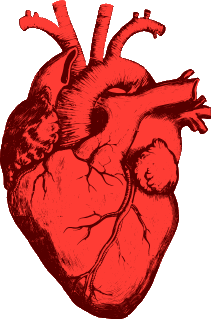
The epinephrine that is released in the bloodstream causes an increase of heart rate, blood pressure, and metabolism. Adrenaline shortens the isometric contraction phase of the heart, increases the systolic emptying of the left ventricle, increases the amplitude of the first and second heart sounds and lowers the diastolic pressure.
Respiratory System
Adrenaline also relaxes the airways, allowing the muscles to receive more oxygen. This often causes breathing to become shallow. The bronchioles dilate to get more oxygen and as a result the breathing rate increases.


Liver and Glucose
Together adrenaline and cortisol increase your blood glucose levels. Adrenaline enters the liver and produces more glycogen, which is then released as glucose and allows more energy to be used by your muscles

Digestive System
Adrenaline enters the digestive system and constricts the blood vessels involved, therefore slowing down the digestive process (vasoconstrict). Instead, it vasodilates and allows the body's energy to be used in more important organs such as the heart or brain, ultimately benefiting the muscles.

Eyes
Epinephrine also causes your pupils to dilate in order to take in more light. As a result, you become more alert and your focus sharpens, allowing you to think faster and clearer.
Cardiac Arrest
Epinephrine is also helpful during cardiac arrest. The body's top priority is to maximize the amount of blood flow through its coronary arteries, which are responsible for supplying blood to the heart. When adrenaline is injected into an intravenous fluid solution, the coronary artery pressure increases, promoting increased coronary artery blood flow.
Asthma Attack
Generally, those who experience asthma attacks have lung passages that are more susceptible to inflammation and swelling. This causes constriction of the muscles surrounding the airway tubes while also increasing the amount of mucus being produced. As a result, the individual may experience shortness of breath, coughing, or wheezing. A small dose of epinephrine (inhaled) can provide short term relief from these symptoms by widening the bronchial tubes, allowing easier breathing.